
Emergency water removal in Conroe, TX
Standing water gets worse by the hour. Here's what removal actually involves, and why a shop-vac isn't built for the job.
Call For Help(936) 274-144624/7 emergency line. Free estimates from local pros.
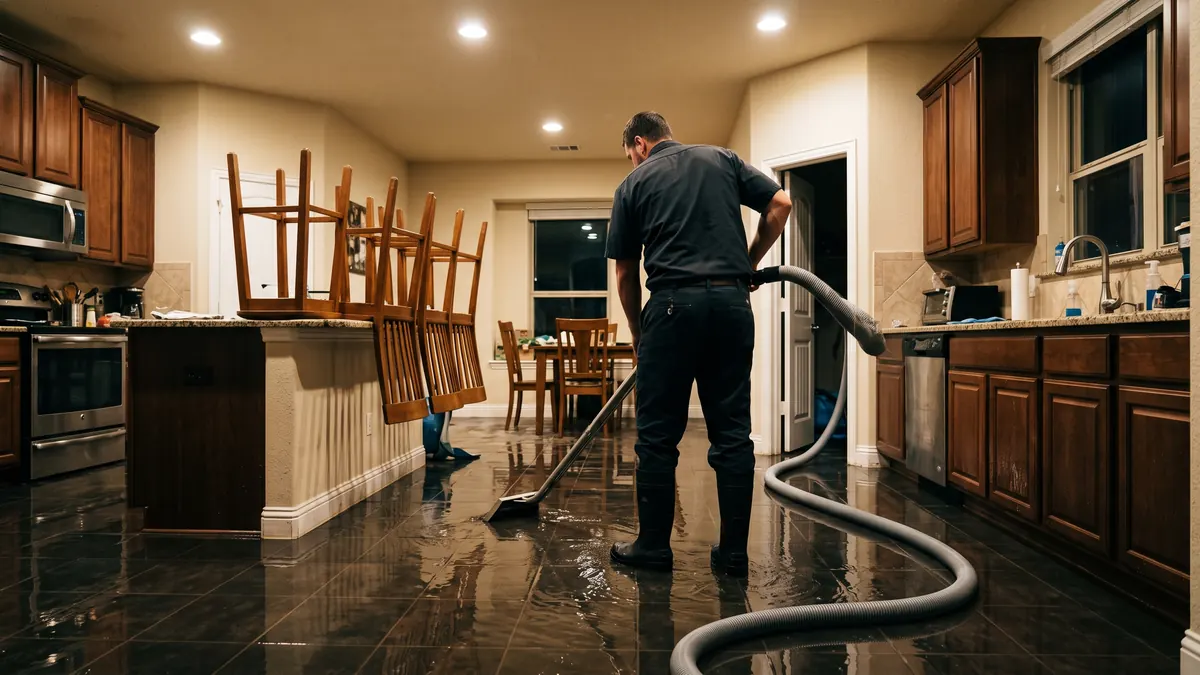
Standing water doesn’t sit still and wait for you. Carpet takes it first, then drywall, then the base of the cabinets, all inside the first hour. Every hour past that adds rooms to the estimate. Emergency water removal means getting that water out before it goes any further.
Carpet, drywall, and cabinets soak at different speeds
Carpet works like a wick. Water gets pulled down into the padding within minutes, and that padding stays soaked long after the carpet on top looks and feels fine again. Drywall pulls moisture up from the bottom edge, climbing higher the longer it sits, even once the puddle on the floor is gone. Cabinet bases and baseboards pull water sideways along the grain, which is why a dry-looking cabinet can still be soaked an inch behind the face. None of that damage announces itself the moment the water arrives. It builds while you’re still deciding what to do.
Extraction comes first, then the equipment stays
Standing water comes out first, usually with truck-mounted extraction pulling gallons at a rate a household tool can’t match. Moisture readings come right after, checking flooring, drywall, and framing to map how far the water actually traveled, not just where it’s visible. EPA guidance points to a 24 to 48 hour window for getting wet materials fully dry, which is why air movers and dehumidifiers often stay in place for days after extraction wraps, not just hours. The drying time guide shows what that stretch actually looks like, day by day.
Why a wet vac at home won’t finish the job
A household wet-dry vac pulls surface water off a hard floor well enough. It doesn’t have the suction to pull water out of carpet padding, and it does nothing for moisture already inside drywall or subfloor. Professional-grade equipment works in categories: high-volume extraction units for standing water, moisture meters and hygrometers to find what’s still wet under the surface, and commercial air movers and dehumidifiers to push that moisture out over the following days. Each piece does a job a shop tool can’t.
Stop the water, then check the power
If a supply line or fixture is still running, close it off first. Water near outlets, a breaker panel, or plugged-in appliances raises the stakes: shut power off at the breaker rather than touching a switch in a wet room. Both steps take under a minute and matter more than anything you do after.
Take a few photos before you clean anything up
Grab your phone before you touch a mop or move a box. A handful of photos of the water level, the source if you can see it, and any damaged belongings goes a long way for an insurance claim later. The what-to-do guide shows the fuller order of operations, from that first photo through the first week.
What the next hour decides
Call now, and the hour starts counting toward drying instead of soaking. Wait, and that same hour goes to water spreading further under the baseboards and up the drywall, turning a same-day job into a longer one. Once the water’s out, the water damage repair page breaks down what comes next, from what gets cut out to what actually gets saved.
Common questions
Does calling at 3 a.m. actually reach someone?
Yes. Water damage doesn't keep business hours, so the line answers around the clock. A call at 3 a.m. gets the same questions and the same next steps as one at noon.
How long until my house is actually dry?
It depends on how much water got in and what it soaked. Most jobs run several days with equipment running the whole time. The drying time guide breaks down what happens day by day.
Do I need to move out while it dries?
Usually not. Most homes stay livable with equipment running in the affected rooms. If contamination or structural damage is severe, a company will tell you plainly if part of the house needs to stay off-limits for a stretch.
What should I do before anyone gets to my door?
Stop the water at the source if you can reach it safely, cut power to any wet area near outlets, and take a few photos. Don't wait on those steps for a call to connect first.
Related pages
Appliance Leak Cleanup
The tank is a plumber's job. The floor underneath it is a different problem entirely.
Learn more →Burst Pipe Cleanup
A burst pipe is loud, fast, and the kind of loss most Texas policies are actually built to pay for.
Learn more →Ceiling Water Damage
The color, edge, and spread of a ceiling stain tell you more about the source than a guess ever will.
Learn more →Commercial Water Damage
A flooded stockroom isn't a flooded living room. Inventory, leases, and a reopening date all ride on it.
Learn more →Talk to a local pro now
We answer 24/7. One call gets a Conroe crew moving on your water damage, with a free estimate and help with your insurance claim.
Call For Help(936) 274-1446Free estimates. No obligation to hire.